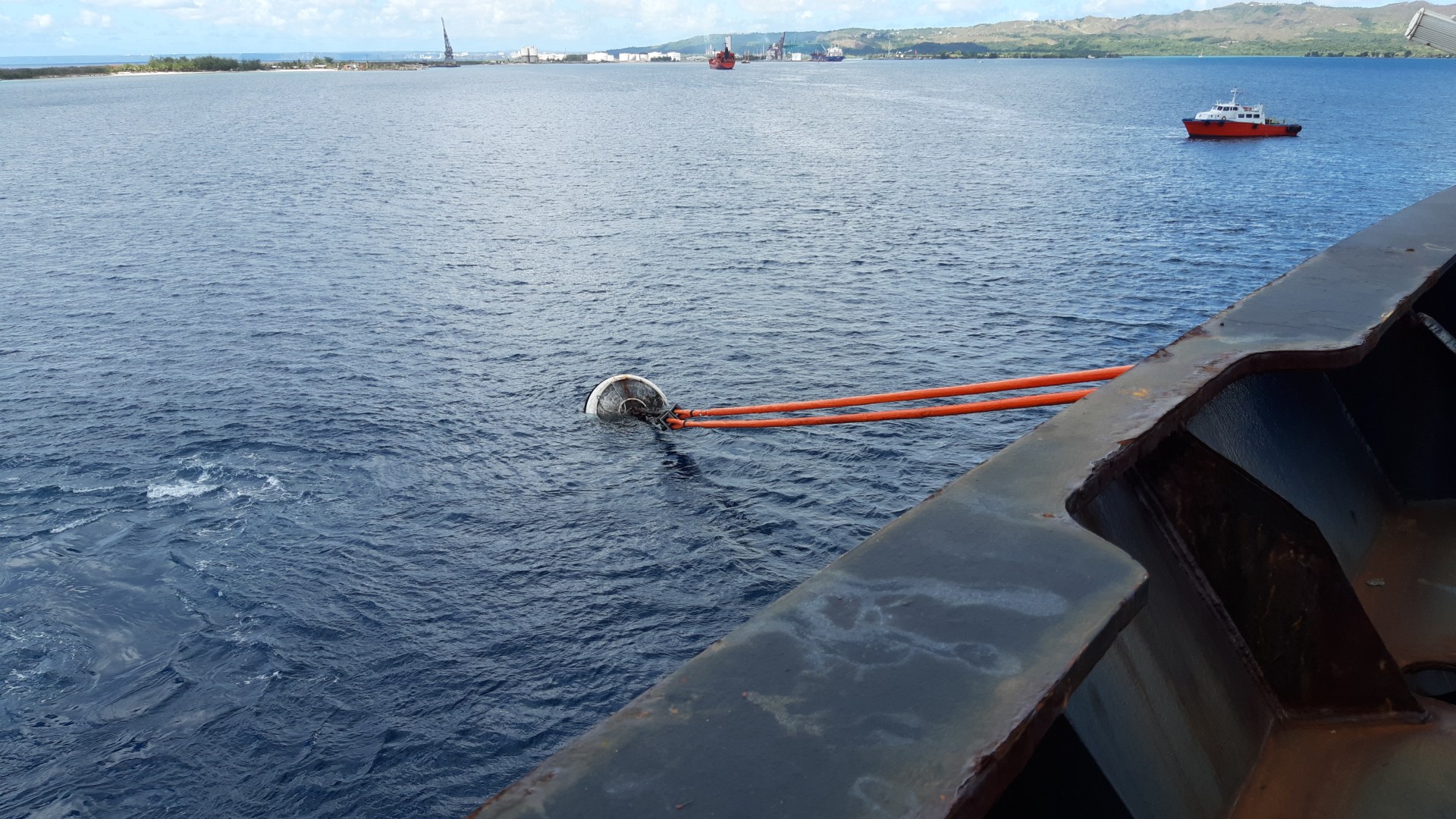
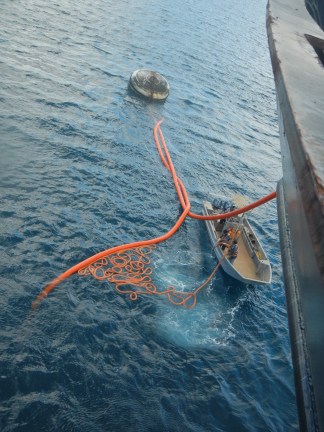
Today was the day we fixed the Mooring. As you can see in the picture, we had a bit of a problem. Instead of anchoring, Apra Harbor has Mooring Buoys for ships to tie up to for extended stay. As the wind shifts, the lines can get twisted due mostly impart because while the Buoy is chained to the sea bottom it still floats and is lighter than the ship. The lines often get twisted, because the buoy moves as it bobs up and down. We have been here a while, and when twists happen you have to letgo lines and re-tie up. The use of a Mooring Buoy, while routine for this ship, was a new technique for me. I got to observe a new mooring procedure, which meant I got to take pictures! What would I do if I couldn’t take pictures?! Yeah, I don’t know either, haha! But it was nice to capture the Deck Crew in action.


Mooring is one of the most dangerous operations a ship does. The lines are under immense tension and you must pay attention!! Something can go wrong, and if it does, it will happen quickly! Whether you are anchoring, mooring to a pier, or using a buoy, as in this case, it makes no difference. Mooring is dangerous! You must know what you are doing, and PPE is not an option. Gloves, steel toe, and a hard hat! The Safety Observer plays and important role, but even more important is to know where you are at all times in relation to a line under tension, and to be aware of everything happening around you. It is also important to have a brief before hand to cover all the potential risks and to verify that everyone is on the same page. A debrief helps learn and importantly, prevent mistakes, and injuries!
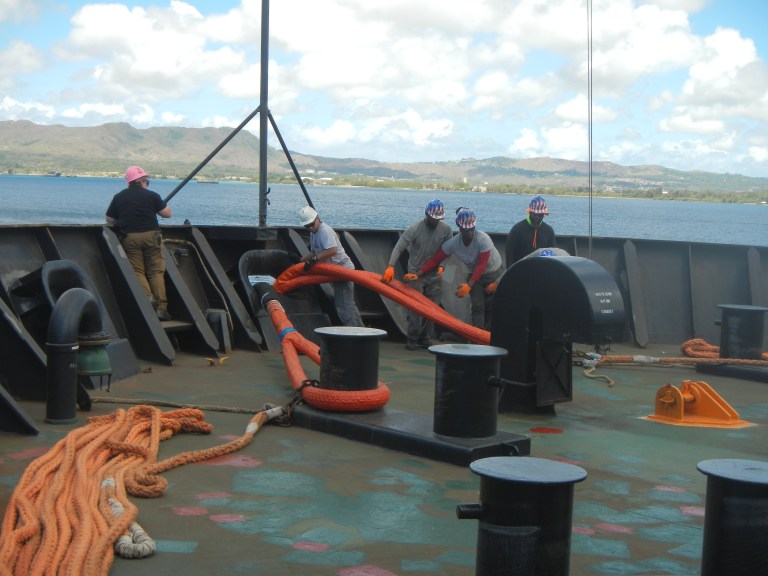 The process is very straight forward. This picture above shows the two mooring lines that are connected from the buoy to the bits via the bullnose. These lines, to protect against wear, have chaffing gear and are coated in the orange wax. The wax not only protects the line, but also allows them to float. The lighter orange line faked out on the deck in the messenger line, and is connected to the eye of the mooring line using the chain. The winch will take up tension using the messenger line. The first picture below shows this step. Once the messenger is pulled tight, a Stopper Knot is tied to hold the tension while making the eye safe for the crew to lift off of the bit. Picture (2) shows OS Kefrem tying a Stopper Knot – West Coast Style! The last step is to lower the line(s) into the water. To tie back up you reverse this process. Untangling these line was an all team effort. Two tugs, a Pilot, a work boat, and even our launch boat helped with the lines in the water.


Stay Salty!
-Emily

 Modern Mariner