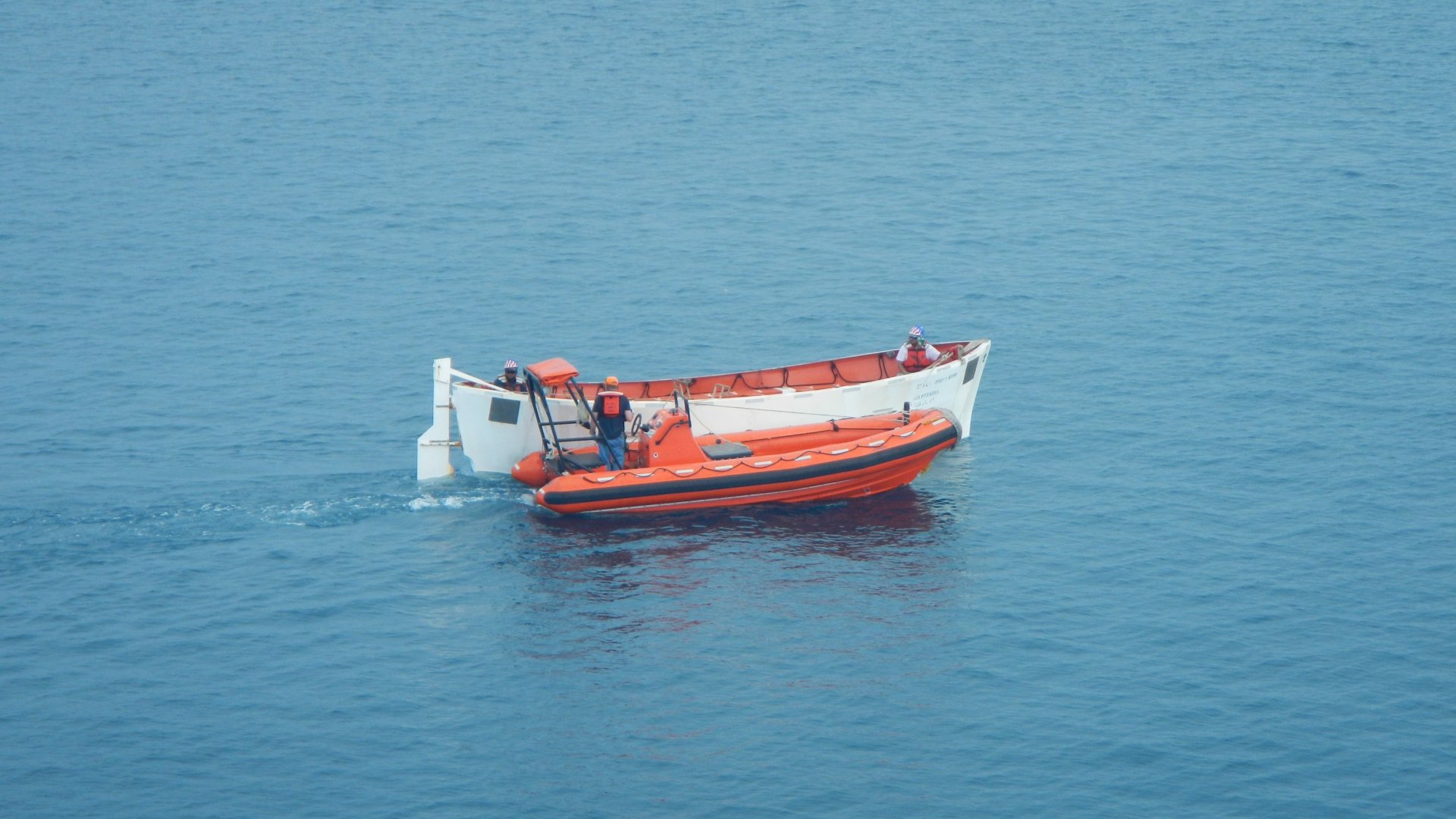
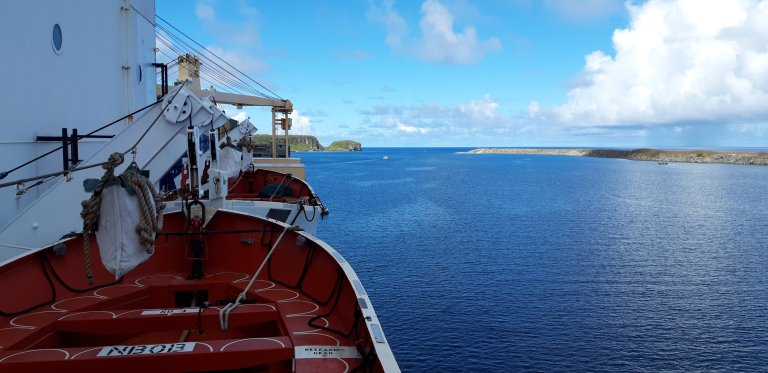
Ok, so technically, these are Open Lifeboats, and not Monomoys, but that doesn’t make for a cool sounding title. Fixing these boats and getting them ready to set sail once again is the best way to describe my time on board thus far. It has been an in depth process. In this post I explain the process of getting boats ready to be lowered and towed ashore for their nesseccary repairs. Getting these boats ready and repaired took weeks, and this is definately a project that I am glad is behind us. So what is different about these boats? Monomoys are solely man-powered. Open Lifeboats have conventional propellers installed, powered by flemming gear. Of course, I do chuckle because, these boats are from the mid-1980s! Under the benches are compartments filled with all the gear such as provisions, flares, and water packets.
Before the boats could be lowered and taken ashore for repairs, they, first, had to be stripped down and emptied of their contents. BOBO began construction in 1984, which means these boats are OLD. In fact, so old that they fall under the grandfather of the grandfathered set of SOLAS Regulations [Safety of Life at Sea – the international regulations that determines life saving measures of shipping]. These boats are so old that few ships in the world, let alone the US Fleet still have them in use. So this was a learning process for me. Lifeboat rations are measured in kilojoules, and the old CFR(s) even states that required rations could even be substituted for milk and bread – luckily we just buy extra lifeboat food. There are 6 Lifeboats on board which have a total capacity to hold 200 persons. That’s a lot of water and food packets – about 150 provisions perboat! The other thing I learned is that back in the 1980s seasickness pills for lifeboats were not required, thus they are not provided. If you find that shocking, I did too. But don’t worry there is a rinky little fishing kit provided that will save us all! Taking all the stuff out of boats was not easy, and it was a team effort.


Next, we had to put fenders over the side, weighing easily 250 pounds each. Using the crane and RHIB we were able to lower them down to the water, and tie them together. Once the boats would be lowered the fenders’ weight is necessary to counterbalance the lifeboat Falls and keep them back in their upright position afterwards.
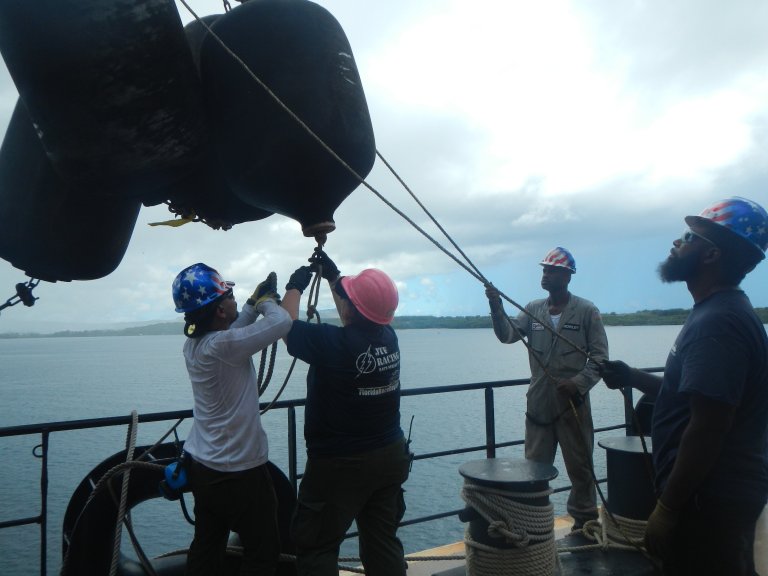


With the boats emptied, and the fenders rigged to counter-balance the Falls, the Lifeboats can be towed ashore. Using three lines, the boats are made fast, crossing the bow and stern lines. Using the RHIB – Ridged Hull Inflatable Boat – we were able to tow the boats ourselves over to the neighboring pier. It seems straight forward; lower the boats bring the RHIB along side, make fast to be towed, unhook the Falls, but do not underestimate the time and precise coordination this all took.


Always remember that God gets to have the last laugh, for he can make it rain! It seriously rained all day long!! 🌧
Stay Salty!
– Emily

 Modern Mariner